Digestive symptoms need context not just a note.
Digelia brings together meals, symptoms, timing and intensity so you can read your digestion with more distance.
Useful for sensitive guts, recurring discomfort and notes before a consultation.
- Bloating
- Reflux
- Cramps
- Transit
- Method 1Choose the feeling
- Method 2Add intensity
- Method 3Connect it to your food journal
Bring order to scattered signals
See whether a symptom is isolated, recurring or concentrated in certain periods.
Separate mild discomfort from an episode that genuinely weighs on your day.
Spot meals, foods or contexts that often appear before a symptom.
Find out what makes you bloated in 7 days
As soon as you open the app, 9 questions about your symptoms, when they happen and the foods you suspect. Digelia turns them into your digestive profile and a simple plan to confirm what really matters for you.
- 1
9 questions, about 2 minutes
What bothers you, when, and which foods seem suspect. There is no wrong answer.
- 2
Your digestive profile
3 FODMAP groups to watch first, out of the 6 tracked, with concrete examples.
- 3
Your 7-day plan
You log your meals, Digelia looks for links: a first preview around day 2–3, your leads in My triggers around day 5–6.
Starting leads, not conclusions: your meals and feelings over the next days will show what really matters. Not medical advice.
Your FODMAP triggers, spotted meal after meal
Every logged meal is broken down into 6 FODMAP groups. Digelia matches that exposure with how you feel to surface what seems to bother you, and what goes down well.
Check a dish before you eat it
At a restaurant or the supermarket, a photo or a few words is enough. In seconds, Digelia spots the foods and their FODMAPs, and estimates whether the dish is rather gentle, worth watching or rather tricky.
- Photo or description, e.g. “four-cheese pizza”
- The dish’s FODMAPs, group by group, with reliability
- Your suspects in the dish, flagged
- Nothing is added to your journal unless you eat it
To be confirmed: not medical advice.
Your FODMAPs today
On the home screen, the 6 FODMAP groups estimated from today’s meals, the most present one highlighted and your watched groups first.
My triggers
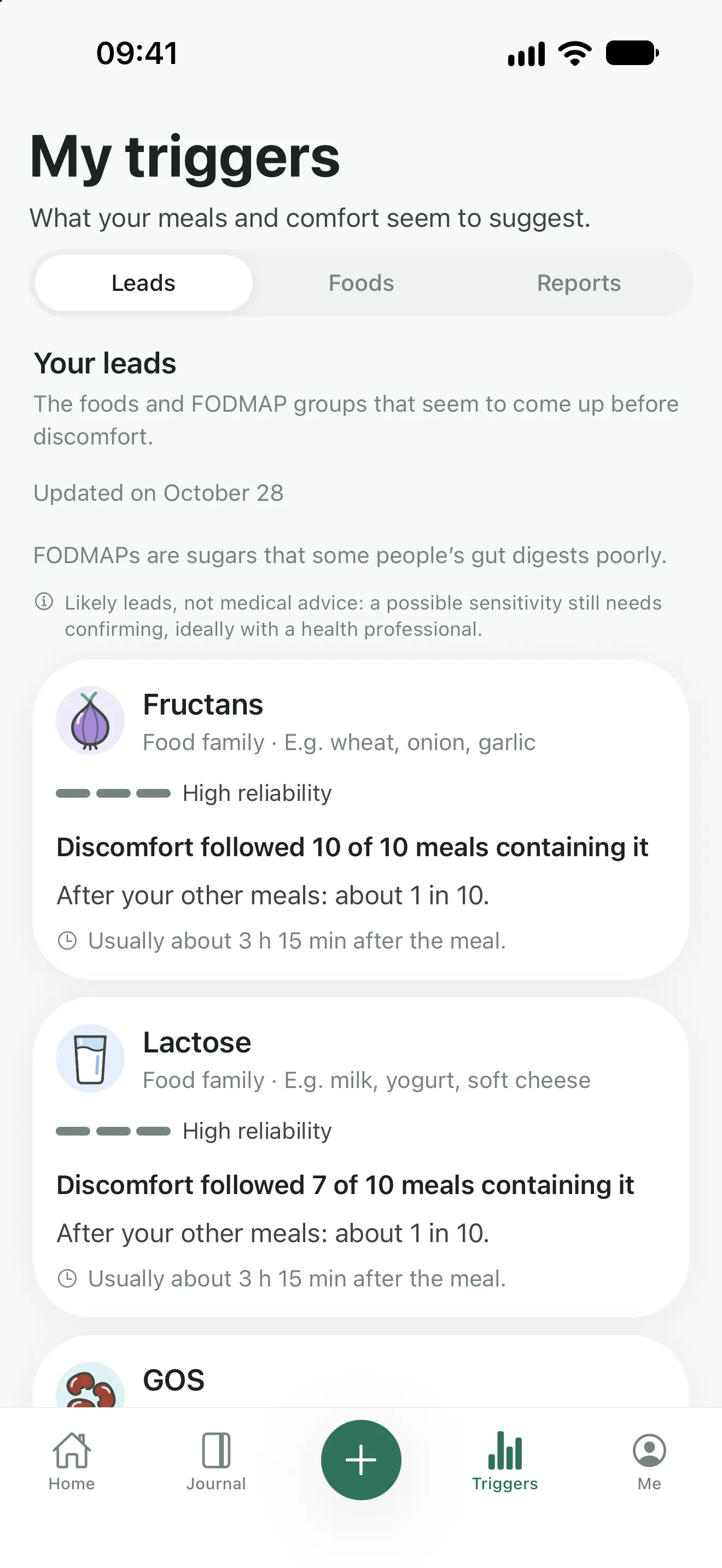
Your leads to confirm, by food or by FODMAP family: how often discomfort follows, usual delay and the role of quantity. A gauge shows how far along you are, and the Reports tab exports a PDF to show your doctor.
Your tolerance, food by food
From most worth watching to best tolerated: each food gets a cautious verdict, with its confidence level.
Estimates and likely leads, not medical advice: a possible sensitivity still needs confirming, ideally with a health professional.
Day to day, a few taps are enough
Favourite meals
Your usual meals are logged again in one tap, nothing to retype.
“How’s your tummy?”
About 2.5 hours after the meal, one tap is enough: good, meh, bloated or pain.
Evening check-in
A reminder to look back on your day, plus a morning check-in if you like.
Simple tracking for several feelings
Tracking works best when it stays quick. Digelia helps you record just enough for the data to make sense.
Choose the feeling
Bloating, reflux, cramp, nausea, transit or vague discomfort: you keep the wording simple.
Add intensity
A simple scale helps show whether a trend is truly disruptive or only occasional.
Connect it to your food journal
Symptoms do not stay isolated: they are read alongside meals and daily context.
What you can understand better
Symptoms that truly repeat
Regular tracking avoids relying only on the episodes you remember most.
Post-meal windows
Some feelings arrive quickly, others later. Timing changes interpretation.
Useful data to share
Frequency, intensity and context can be grouped into a PDF for the last 7 days, 30 days or the dates of your choice.
Frequently asked
Which symptoms can I track?+
You can track many digestive feelings. Bloating, cramps, reflux, nausea, transit and discomfort are examples, but the list is not limited to them.
Does tracking work if my symptoms are irregular?+
Yes. A regular journal can reveal whether isolated episodes share a common context.
Can I share this information with a doctor?+
Yes. Digelia can generate a PDF for the last 7 days, 30 days or the dates of your choice. It includes your meal journal, symptoms and days to help prepare a more concrete conversation, without replacing examination or professional advice.
Related guides
Keep going with a page close to your need.
IBS app
Digelia helps you live with IBS (irritable bowel syndrome): track meals, symptoms and possible triggers, and prepare your consultations.
FODMAP app
Digelia is a FODMAP app that checks a dish from a photo, tracks fructans, lactose or polyols, and surfaces the foods that seem to bother you.
Food journal
Keep a simple food journal with meals, symptoms and clear trends to better understand what affects your digestive comfort.
Start with your own meals.
Install Digelia, log a few meals and let patterns appear over time.